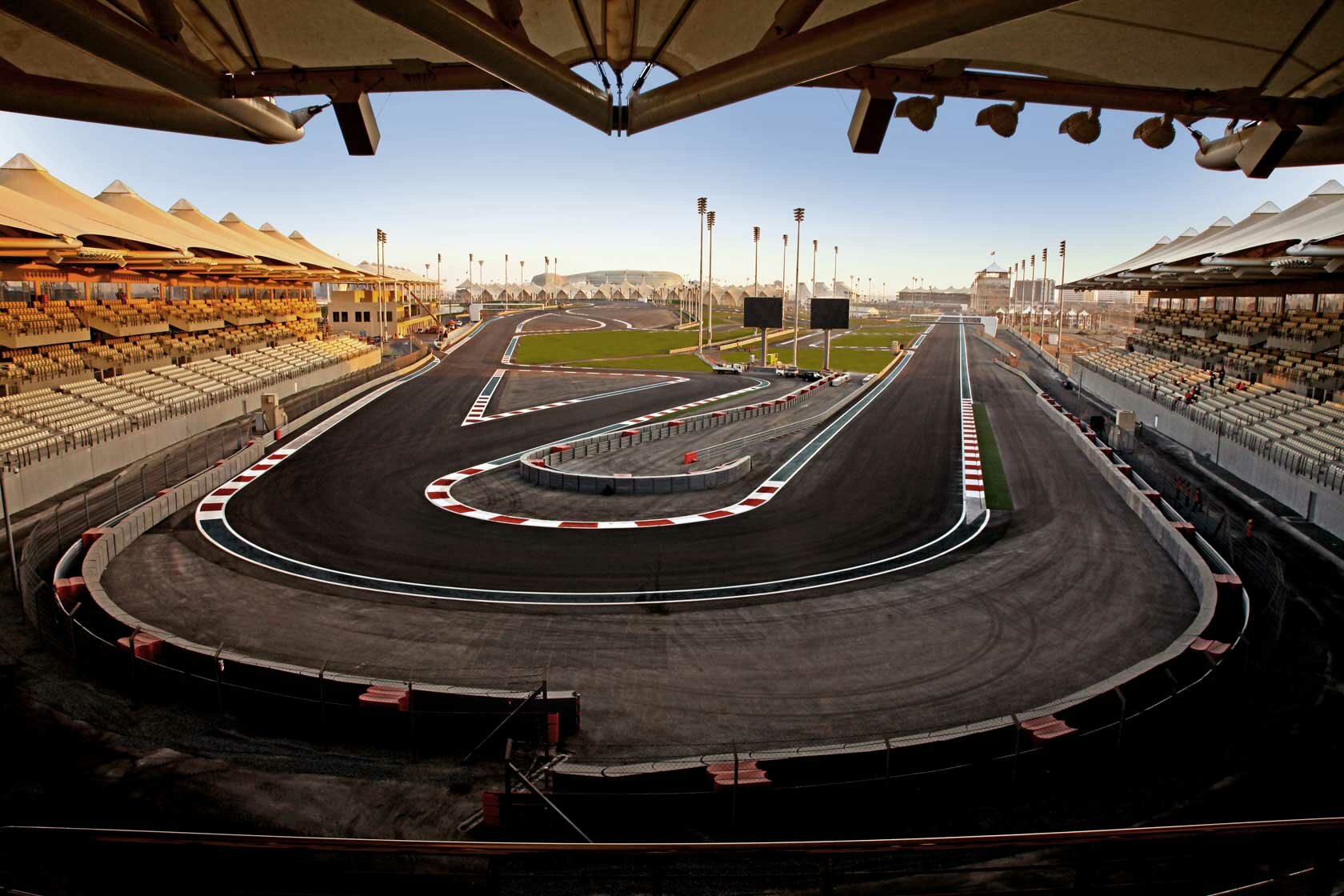
Spa, a track that needs no introduction. Eau Rouge, La Source, Hakkinen vs. Schumacher...they all spring to mind when we think of this great track. Well they do for me, a life long Formula 1 fan who favours the 'original' tracks of the F1 circus. Amongst these modern, 'car park' layouts (Mark Webber's words, not mine), there remain a few classic, tree lined circuits that enable Formula 1 to cling onto its roots - excuse the pun.
The F1 calendar has changed drastically in recent years, shifting a large percentage of its calendar East to new modern tracks, designed to encourage overtaking and induce mistakes. Few tracks remain where tarmac was simply laid where it was practical to do so, creating winding corners, natural dips and undulations. As a result, an increasing amount of Formula 1 circuits are arguably becoming rather indistinguishable. The racing is fantastic there is no doubt about it, but many of these tracks lack the character and individuality of Monte Carlo, the old Hockenhiem and Spa, to name a few.
Car park like run offs
With Hockenhiem's layout being trimmed of its frighteningly fast straights, it has lost a large part of what made it special. Monte Carlo remains largely true to its origins but if you don't fancy clinging to a tree, ticket prices can only be described as astronomical. So Spa, one of the last remaining classic gems of the F1 calendar, is also one of few that offers a far more affordable chance to experience Formula 1 in it's natural environment. For this reason, I think that F1 fans of new and old should all experience this great circuit in the flesh.
And there's another reason too. Because 2013 is the last year F1 will use the naturally aspirated V8s that have been raced since 2006. These engines, smaller descendants of the monstrous V10s of the late 90s and early noughties, sound especially epic through the forests of Spa. Last year I visited Spa for the GP, and was absolutely blown away by the presence of the world's most advanced motorsport on one of the world's most beautiful classic circuits. Its not the volume, or even the speed of these high powered machines that affected me most, although both were equally astounding. Instead it was hearing those V8s sing into the distance, through the dense forest that inhabits the track. This experience, is something I think all car fans should get a chance to experience. One that no other sport can match.
A BTCC fan might tell you that one lap of a race has more action than an entire GP. A Moto GP fan may tell you their motorcycles reach a higher top speed. But neither of them can come close to F1 when it comes to that hair raising feeling an F1 engine creates as it echoes through the trees.
A Force India spits a blue flame
Of course, modern Formula 1 cars create much more than just an engine noise. There's the gearbox, banging through the gears at inconceivable speeds. It's something you not only hear, but see with blue flames popping out of exhausts and most strikingly, something that you feel like a sharp bass line in your stomach. There's the sound of 8 cylinders switching to 4 as drivers come off the throttle, creating a harsh and aggressive note distinctive to Formula 1. On top of that there's the smell of burning rubber and cooked carbon brakes. The orchestra of a Formula 1 car is not done any justice on TV - try telling a conductor his band sounds best through your stereo lounge set up. Witnessing an F1 car up close is something very special, and witnessing it in the theatre of Spa is just fantastic. And this could be the final chance to hear the naturally aspirated orchestra we have now, before forced induction engines are released onto track in 2014.
Vettel & Schumacher pushing at Spa
Now I'm not saying the 2014 engines won't sound amazing, I have no doubt in my mind that they will. But forced induction has a habit of quietening things down. So I say experience the fantastic orchestra we have now. Stand at the end of Kemmel Straight and listen to those V8s scream towards you at 18,000 revs, before feeling the gearbox shove down the gears. Walk through the forest in the middle of the track during a busy practice session. You'll be amazed how you're surrounded by nature but can hear nothing but high revving technology.
Anyway, that's enough of me trying to describe the sound in plain old English. From here on I'll let the videos do the talking. Turn up your speakers...
Screaming V8s up Eau Rouge:
Along Kemmel Straight:
Banging down the gears into Les Combes:
And one to show off the speed and phenomenal downforce an F1 car generates through Eau Rouge:
The motoring world seems obsessed with numbers. Top speed, BHP and 0-60 figures are deciding factors for many car buyers, especially those looking for thrill and excitement. But should these numbers be priority when looking for a fun drive?
Picture the familiar scene. You're onto your second pint, whilst you and your pub companions are discussing the reason why their car is the most fun to drive. One says the kick up the backside of his torquey Focus ST is the reason it's most fun. Another claims his 'charged Jag's 0-60 sprint creates the most exhilarating drive. And the last is adamant his R reg Elise brings an unbeatable smile to his face through the 'twisties'. Then it's your turn to answer. Of course, your car is the most fun since you drive a car that encompasses all of those qualities in it's own way..don't you? We should hope so, because many would agree that for the ultimate driving experience, a combination of these strengths is required to form a capable, balanced car.
Let's take the previous generation of Vauxhall Astra VXR for example, a car I'm familiar with thanks to several spirited outings in one. There's no doubt, the car is stonkingly quick in a straight line. But throw in a change of direction and the front axle doesn't want to play. Under steer and torque steer really take from the driving experience. It's this imbalance of grip between the front and rear axles that will hamper a drivers 'fun factor'. We think going sideways is fun, but having a tail happy car that constantly oversteers damages driver confidence, making them nervous on turn in for fear of a spin. In short, it's not fast and it's not fun.
An understeering classic racer
For the ultimate driving experience, a car with a neutral balance is what we require, because ultimately a car with a neutral balance is under control. Rather than compensating for understeer, or correcting oversteer, the driver can place the car exactly where he wants. And if he wants a little sideways action, he's got the control to make it happen. This gives the driver confidence, and therefore is not only fast, but fun.
An oversteering Chevvy Camero
A car with a neutral balance will also have a wider window for being 'on the limit'. A driver may find that whilst reaching the limit of mechanical grip, the car begins to slide ever so slightly. These slides can be worked with to angle the car at an apex, or to drift towards the exit of a corner. It's here we find the Holy Grail, because these minute slides are where the exhilarating feel of the limit can be felt. And if you make a mistake, which with most of us being B-Road superheroes we inevitably will, there's more time to correct the car, and a smaller correction is needed. By widening the window of that limit, driving on it becomes easier and therefore more fun.
Hybrid electric vehicles are beginning to flex their green muscle in the face of conventional pure combustion engines. But are these popular hybrid muscles tarnished with a lesser known, unsustainable truth?
You don't have to be an motoring expert to acknowledge that sales of hybrid vehicles have increased significantly in recent years. Not only are there noticeably more manufacturers bragging about efficiency and reducing CO2 numbers, but there is also a substantial increase of vehicles circulating on our roads with electronic assistance. This increase is no more clear than in the US, the world's biggest consumer of hybrid electric vehicles, where sales of hybrids now contribute to almost 3% of all new car sales. This figure may seem insignificant, but in reality this represents over 322,000 sales in 2012 to date, an increase of over a quarter of a million annual car sales when compared to a decade ago.
One reason for this increase can be attributed to the obvious expansion of hybrid vehicles available to buy. UK buyers are now faced with a large range of hybrid offerings, ranging from small hatchbacks, to 4x4s and now even supercars (Ferrari's F150 is the latest example of this). Focusing on the more affordable end of that spectrum, if we were to look back to the dawn of mass produced hybrid vehicles, we'd see some rather ugly attempts at futuristic design combined with poor quality interiors and sluggish performance. Thankfully, the case now is very different, and the market offers some more fashionable lookers that manage to hide their electric talents under the bonnet. These talents are also another major pull factor for drivers as they can represent massive savings in running costs.
If we ignore some rather astronomical figures achieved by 'hypermilers', who we can assume did little more than flex their little toe to accelerate, Honda's Insight hybrid can achieve an impressive 61mpg from it's electronically assisted 1.3 litre engine. It also still manages to reach 60mph in a whisker over 12 seconds, making it more than useful for the average journey. These impressive headline figures are matched by low tax brackets, with many hybrids sitting firmly under the tax exemption line of 100g of CO2/km.
Honda Insight
So surely hybrid electric vehicles have provided us with a fantastic push towards sustainable motoring, by reducing emissions and improving efficiency in our road cars? You'd like to think so, but delving deeper into the workings of a hybrid electric motor, it becomes clear that there exist several sustainability issues. These issues could mean that in some ways, the hybrid vehicle is actually more costly to the environment than it's pure combustion engine predecessors.
These hybrid issues come in the form of rare earth metal; neodymium to be precise. Hybrid electric vehicle motors found in Honda's Insight and the worlds best selling hybrid, the Toyota Prius, require neodymium magnets to ensure they remain light and therefore as efficient as possible. But there's a catch; much like coal and oil, neodymium is a finite resource, meaning it will run out. Unlike coal and oil however, it won't last for another century. Neodymium demand is expected to exceed supply within the decade, and as a result it's extraction is becoming evermore desperate.
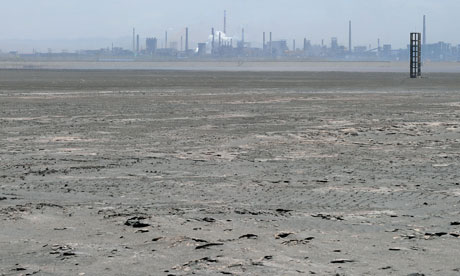
One of the world's biggest suppliers of neodymium is China. Locals outside the city of Baotou, close to plants processing rare earth metals such as neodymium, have watched their lake dry up and farmland deteriorate. This is due to the processes required to extract and process rare earth metals, generating radioactive waste and acidic water. It's no surprise to hear that much of the area's population have experienced ill health as a result, with cancer rates souring and life expectancy decreasing. This grim truth is a far cry from the futuristic, green credentials of hybrid car sales in the Western world. Perhaps one of the most horrid realities is the lack of knowledge of these issues from hybrid car buyers. Attracted by headline figures, and sometimes with good will to lower their contribution to automotive pollution, drivers can be innocently contributing to the destruction of distant landscapes and afar communities.
Lake turned radioactive wasteland in Baotou, China
Nevertheless, there is still hope; 2012 brought with it the news that Toyota has been developing a new 'induction' type electric motor that does away with the requirement for neodymium magnets. With it reductions to weight and cost could improve efficiency further. And remember, Toyota is the world's biggest seller of hybrid vehicles, therefore this could have a colossal influence upon the future of hybrid and even fully electric cars. But for now, only time will tell if the hybrid car can remove the shackles of rare earth metals, because as it stands they represent a substantial barrier to efforts for a more sustainable automotive future.
There's something about having to really work a car that makes driving fun. Effortless cars are boring, cars that need to be wrangled are exciting. That's what's great about the latest generation of small engine city run-abouts, with low power but short and revvy motors. They're perfect in their natural environment - tight and twisty city streets.
Take the new Volkswagen Up for example. In its most basic spec it's got a 60bhp 1 litre engine that needs almost 14 seconds to hit 60mph. Not ideal when trying to muscle onto a motorway between 10 ton lorries, but more than capable on tight city back roads. And let's face it, you'd be lucky to hit 25mph on most inner city streets, with suicidal pedestrians and Chelsea tractors lining the road side. Having to work through the gears to ensure you have enough puff makes driving fun, almost like a scaled down sports car. Add this nippy fun to £20 tax and over 60mpg, and you get a ridiculously cheap run about representing some of the best value for money motoring.
In fact I think it represents such good value, that these run abouts are the answer to todays urban petrol head problems. Leave the sports car at home, keep it for a spirited country drive. Take the hatch to town. You'll love them both more for it.
18 months on and I still bloody love the thing. I've owned my RenaultSport Clio 182 since the very end of May 2011, and in that time I've barely covered 10,000 miles. But I can honestly say that I've enjoyed every single minute of it, not least because the thing is so fun to drive!
I find myself looking forward to journeys that I know will include open stretches of road or twisty back lanes. The car seems so eager to be driven that even on days I plan on giving it a good wash and wax, I get the feeling it's looking at me in the same way a dog looks up at it's owner when they mention the park - it wants to go for walkies...or in this case it wants to be driven. I'm a sucker for a puppy face, so most times I give in. I have to admit, as a result many of the miles I have covered in this car have included a good thrashing.
The dirty girl
But at no point does the car make you feel guilty for pushing it. Instead it makes you feel guilty for not pushing it. The engine is so lumpy on tick over, it almost seems as though it's beckoning you to rev it. The steering is heavily weighted, giving the impression Renault didn't intend for this car to be a parallel parking champion. And the Cup pack suspension is crashy at low speed, as it manages to find even the smallest bumps in the road. The car may look like a city run about, but it feels so unnatural cruising through urban streets.
All that changes however, when you are faced with the white circles of unrestricted sign posts, and a tree lined road heading over a crest. The car comes alive when you open up the throttle and reach the 5000 rpm mark. At this point the Variable Valve engine awakens and manages to head sharply towards it's peak power of 170 bhp. The steering suddenly feels reassuringly weighted as the front wheels tug through the column, and the suspension begins to feel planted and predictable over dips and crests. In the stroke of 2000 revs this car transforms from a crashy city car, to a light and nimble hot hatch.
No better place does the 182 show off it's agile characteristics than a fast flowing, smooth tarmaced race track. I took the car to Snetterton in Norfolk earlier in the month with the expectation that it would suit the fast flowing corners. How wrong I was. Not only did it suit them, it felt like it was built for them.
Despite the damp conditions, the direct steering and quick response made the car incredibly enjoyable to throw into high speed turns and balance on the throttle. The light weight of the rear meant a lot of 'oppo' was applied, with lift off oversteer becoming something of a game. The car felt completely at home balling down Revett Straight at over a ton, and managed to keep off it's door handles through Riches thanks to it's planted Cup suspension.
In some ways it's a shame the car handles so well; it means that the lovely Racing Blue paintwork is rarely shiny and the white wheels are often confused as being a dark anthracite. But when a car is this fun to drive, surely it's more of a shame to not use it properly?
“My car feels like a go-kart”... “Go-kart like handling”...Phrases
often coined by car enthusiasts about performance and sports cars. But can cars
ever really handle like a go-kart without serious modification?
Scraping the floor; sat mm off the tarmac
Over 6 years of competitive kart
racing, plus 5 years on the road, and I'm still yet to drive
something from either side that bares significant resemblance. I drove a whole
host of karts with several engines during my karting career, and have had the
privilege of driving more cars than most 22 year olds. These cars have ranged from a Porsche Carrera, to a Lincoln
Navigator right down to a 3 cylinder Vauxhall Corsa. I can safely say that none
of them, have had any resemblance in performance
and feel to my karts. Yet time and time again, I frequently come across car
reviews and forum junkies who claim their bog standard cars handle like go-karts.
Karting is so pure, that during
my career my ribs were repeatedly cooked by the engine, whilst my butt took whacks
when I rode kerbs. The brakes felt like an extension of my leg, with even
the minutest adjustment having drastic effect on speed and even the angle of entry into a corner. The steering
was so direct, even a stone could be felt through the wheel.
Body roll in my car
Of course, there will be cars out
there that are so raw they’re blue by steak standards, but for the most part, road cars will always be compromised in
their ability to be pure. The challenges presented in ensuring a good ride quality, mean certain areas of cars, such as the suspension, have to be softened. As a result this can compromise their ability to perform effectively at speed and can contribute to a lack of feel. By no means is that a total negative, as I
can vouch by saying I’d much rather be sat in a Diesel Mercedes than my old TKM
115cc go-kart in a traffic jam in the city. For one, speed bumps would
be a nightmare, as having to lift the kart over them could
become just slightly annoying.
Many of us modify our cars
heavily to essentially push them towards that ‘pure’, direct feel of a go-kart. I've recently modified my car, by fitting performance springs and replacing rubber
bushes with solid versions, in order to maximise feel and responsiveness. Despite noticing a
slight improvement, it’s a miles away from a go-kart. The car still leans under
fast direction change, the nose still ducks under braking, and minute steering
inputs are still significantly suppressed when compared with those of a kart.
Now I haven’t had the pleasure of
driving an Ariel Atom or McLaren F1, but for most of us that isn't something we
will ever experience. Therefore it is safe to say, Mr Mini Cooper S, I'm sure your
car handles fantastically, but it’s a far world from the pure handling of a
go-kart.